In short
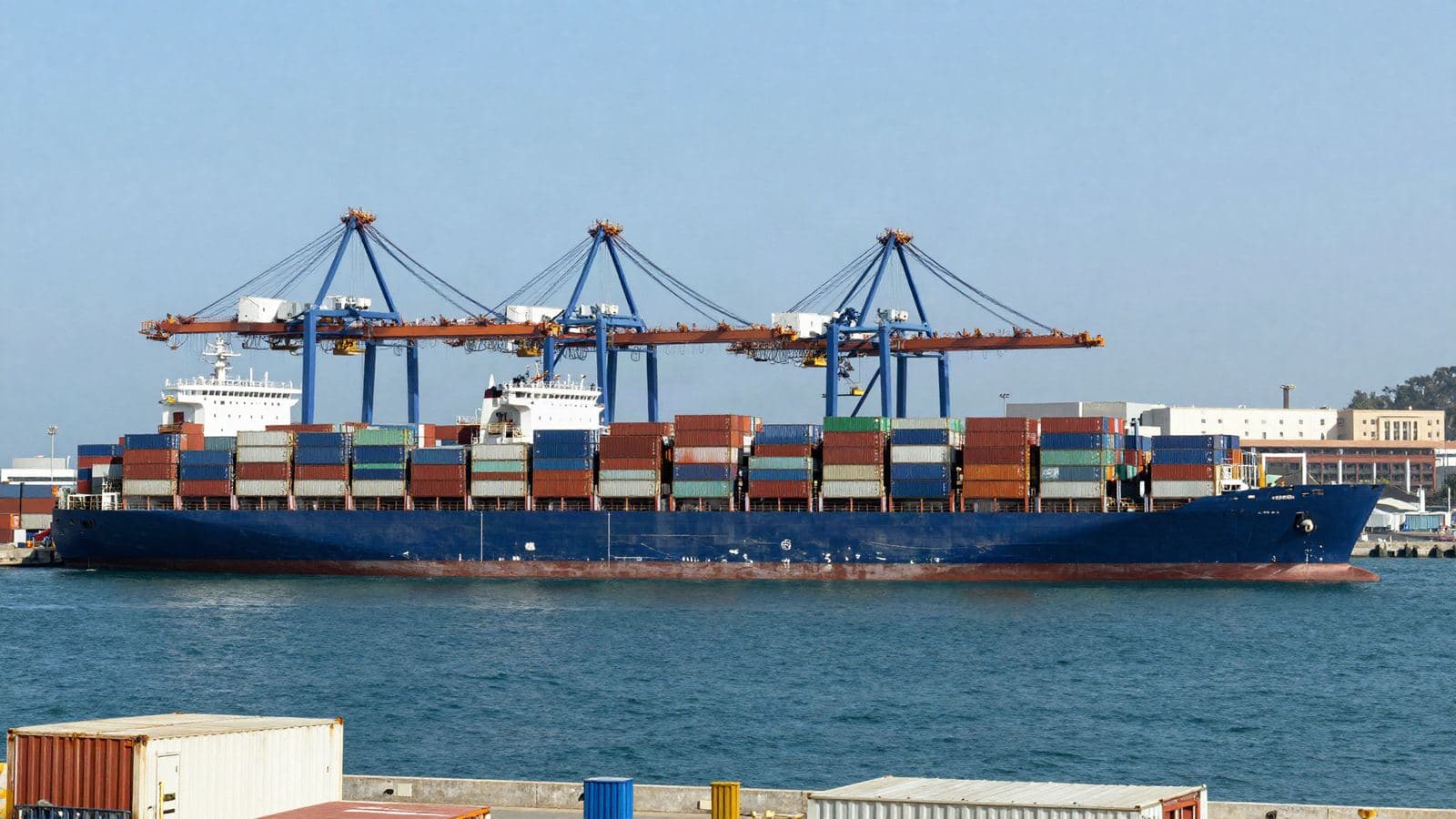
- France is Spain's main export market: about EUR 57.3 billion in goods in 2025, according to Eurostat.
- There are no customs or tariffs, but there is intra-EU VAT, form 349 and VIES checks on the customer's VAT number.
- The Loi Toubon requires French in the presentation, instructions, warranty and invoices of a product.
- Between businesses, payment terms cannot exceed 60 days from invoice date or 45 days end of month.
- France is not a single market: work region by region, with distributors or agents, and do it in French.
Why export to France: bilateral trade data
France is the natural first step for many Spanish SMEs going abroad: a land border, road freight in one or two days and the same single-market rules. But close does not mean easy. It is a mature market, demanding on language and full of European competitors.
- Spain's largest export market. That is how La Moncloa described it in March 2026, with bilateral trade in goods and services above EUR 130 billion and more than 800 Spanish companies operating in France.
- About EUR 57.3 billion in goods exports in 2025, compared with about EUR 58.8 billion in 2024, according to Eurostat's Comext database.
- A Spanish trade surplus of EUR 17,341.6 million in 2025, the second largest after Portugal, according to the foreign trade report of Spain's Ministry of Economy, Trade and Business.
For an SME, this means two things. There is proven demand for almost any Spanish industrial or consumer product. And your Spanish and European competitors are already there, so you need a clear offer and a local partner to champion it. If you are still choosing markets, start with the step-by-step export guide.
Sectors with opportunity in France
Trade data shows where France already buys from Spain. It does not guarantee your sale, but it tells you which categories have importers and distributors used to working with Spanish suppliers.
| Sector (HS chapter) | Verified data | Typical partner |
|---|---|---|
| Vehicles and automotive parts (87) | Close to 17% of what Spain sells to France (UN Comtrade, 2025) | Manufacturers, tier-one suppliers, aftermarket |
| Electrical machinery and equipment (85) | Around 5% (UN Comtrade, 2025) | Technical distributors and installers |
| Machinery and capital goods (84) | Around 5% (UN Comtrade, 2025) | Sales agents and industrial distributors |
| Plastics and plastic articles (39) | Around 4% (UN Comtrade, 2025) | Processing industry and distribution |
| Agri-food (fruit, vegetables, meat) | France was the largest buyer of Spanish agri-food and fishery products in 2023 (MAPA) | Importers, wholesalers and buying groups |
| Furniture | Top destination for Spanish furniture in 2025: EUR 817.9 million, 26% (ANIEME) | Distributors, specialist retailers and contract |
Chapter shares come from the data Spain reports to UN Comtrade; the agri-food figure from Spain's Ministry of Agriculture, and the furniture figure from the exporters' association ANIEME. For your own product, search by HS Code: it is how you learn whether France buys what you make and at what price you can enter.
Requirements to sell in France: VAT, standards, labelling and language
As an EU market, there is no customs clearance and no tariffs. The requirements shift to VAT, language and product rules. This table summarises what to check as of October 2026.
| Area | What applies | What to do |
|---|---|---|
| Customs and tariffs | None: free movement of goods within the EU | Transport document (CMR) and proof of delivery |
| VAT on B2B sales | Exempt intra-EU supply in Spain; the French customer self-assesses VAT | Register in Spain's ROI, check their VAT number in VIES and file form 349 |
| VAT on consumer sales | Above the EU-wide threshold, French VAT applies | Discuss the One-Stop Shop (OSS) with your adviser |
| Technical standards | Harmonised EU legislation (for example, CE marking) | Declaration of conformity and technical file in order |
| Language (Loi Toubon) | French mandatory in presentation, instructions, warranty and invoices | Translate labels, manuals, data sheets and terms of sale |
| Recycling (Triman and Info-tri) | Sorting marks on consumer products under extended producer responsibility | Agree with your customer who handles these obligations |
| Payment terms | Maximum 60 days from invoice or 45 days end of month | Set them in writing in your quote and terms of sale |
Intra-EU VAT: what must not go wrong
To invoice a French company without VAT, you must be registered in the Intra-Community Operators Register (ROI) of Spain's Tax Agency and check that your customer's VAT number is valid in the European Commission's VIES system. Keep proof of the check and of transport. Report the supplies on form 349 and, depending on volume, in Intrastat.
France has been rolling out mandatory e-invoicing since 1 September 2026. According to impots.gouv.fr, this obligation does not apply to foreign companies without a permanent establishment in France, although your customer will receive invoices through platforms. Ask how they prefer to receive yours.
Mandatory French: the Loi Toubon
Article 2 of Law 94-665 of 4 August 1994, known as the Loi Toubon, requires French in the name, offer, presentation, instructions for use, description of scope and warranty terms of a product or service, as well as in invoices and receipts. It also applies to advertising. You can add other languages, but French is essential.
In practice, language goes beyond the law. A catalogue, website and commercial terms in French show you are serious and make your distributor's job with their own customers easier.
Payment terms (LME)
Since the 2008 LME law, payment terms between businesses in France cannot exceed 60 days from the invoice date or 45 days end of month; without agreement, the term is 30 days. Late payment triggers penalties and a fixed EUR 40 recovery fee, according to Bpifrance Création. Some sectors, such as transport, have their own limits. Put the term in writing and consider credit insurance if you offer deferred payment.
Entry channels: distributor, agent, importer or direct sales
France supports almost every model. The choice depends on your product, the service it needs and how much control you want over price and brand.
| Channel | When it fits in France | Watch out for |
|---|---|---|
| Distributor | Products that need stock, technical service or a resale network; often by region | Do not give national exclusivity to a partner that covers one region |
| Sales agent | Capital goods and industrial customers; you invoice and control the price | French law grants agents an indemnity when the contract ends |
| Importer or wholesaler | Volume, standard products or private label | Little visibility of your brand with end customers |
| Retail chains and buying groups | Food and consumer goods with capacity to supply volume | Highly regulated annual negotiations and logistics demands |
| Direct sales and marketplaces | A few large customers or online consumer products (Amazon.fr, ManoMano and others) | Customer service, returns and VAT, all in French |
Many SMEs start with an agent or distributor in a region with affinity (the south and south-east for proximity, or the Paris region for its concentration of buyers) and expand later. You will find the full comparison of models in how to find international distributors.
How to find French distributors and importers
Combine several sources and cross-check the data. These are the ones that work best in France.
Trade fairs in France
| Fair | Sector | Venue | Frequency and next edition |
|---|---|---|---|
| SIAL Paris | Food | Paris Nord Villepinte | Every two years; 17 to 21 October 2026 |
| Global Industrie | Industry and subcontracting | Alternates Paris and Lyon | Annual; 15 to 18 March 2027 at Eurexpo Lyon |
| Batimat | Construction | Paris Expo Porte de Versailles | Every two years; last edition 28 September to 1 October 2026 |
| Maison&Objet | Home, decoration and furniture | Paris Nord Villepinte | Two editions a year, in January and September |
Always confirm dates on the organiser's website. And never go without an agenda: our guide to international trade fairs to win clients explains how to arrive with meetings already booked.
Institutions and associations
- Economic and Commercial Office of Spain in Paris: part of the ICEX network, it offers tailored partner search and meeting agendas, with its own fees and lead times.
- Official Spanish Chamber of Commerce in France: based in Paris, it organises business meetings between both countries.
- ACCIÓ: if your company is Catalan, the ACCIÓ office in Paris supports the search for customers, distributors and partners.
- French trade federations: every sector has one; their member lists and events are a good starting point.
LinkedIn, prospecting and data
LinkedIn is widely used by French executives. With Sales Navigator you can find the sales or purchasing director and run an email and LinkedIn sequence in French, as we explain in international B2B prospecting campaigns. To build the list, Exporta.ai finds importers and distributors with the decision-maker and a verified email.
Business culture and negotiation in France
Every company is different, but some guidelines are worth respecting in a first business relationship.
- Language: write and present in French. Even if your contact speaks English, French eases the relationship and lets them share your offer internally.
- Formality: use “vous” and titles until invited otherwise; emails tend to be structured and courteous.
- Preparation: expect technical questions, comparisons with competitors and reasoned arguments. Bring data sheets, certificates and references.
- In writing: terms are formalised in detail; confirm by email what was agreed at each meeting.
- Timing: decisions may involve several people. Book well ahead and bear in mind that activity drops sharply in August.
Common mistakes when exporting to France
- Reaching out in Spanish or generic English. The message looks like a mass mailing and gets lost.
- Forgetting the Loi Toubon. Labels, manuals or warranties only in Spanish can block the sale or lead to penalties.
- Treating France as a single market. It is large and regional; one distributor rarely covers the whole country well.
- Granting national exclusivity without targets. You lock the market with a partner that may only work one region.
- Not checking the VAT number in VIES. If it is invalid, the supply is no longer exempt and you bear the VAT.
- Negotiating payment terms outside the law. Beyond 60 days or 45 days end of month, your customer cannot accept them.
- Signing with an agent without reviewing the contract. The end-of-contract indemnity can be significant; get advice first.
Grants and support for exporting to France
As an EU market, France fits within the general internationalisation programmes:
- ICEX Next: Spain's national programme for SMEs starting or consolidating exports, with advice from an approved consultant, subject to each call.
- ACCIÓ vouchers: in Catalonia, to hire internationalisation services from an accredited provider.
- Chambers of Commerce: internationalisation programmes and trade missions.
- Trade fair pavilions: ICEX organises or supports group participation in some international fairs.
Amounts, requirements and deadlines change with each call. You will find the current status in our guide to internationalisation grants and, if you want us to handle them, in our grants service.
If you lack a team to open the market, an outsourced export department can choose regions, find and qualify partners, prepare fairs and track progress with KPIs. Our AI-powered B2B lead generation feeds the process with verified contacts in France.
Frequently asked questions
Do I have to pay tariffs to export to France?
No. Spain and France are both in the EU single market, so there are no tariffs or customs clearance. You do have to follow intra-EU VAT rules, EU product legislation and French language and labelling requirements. For transport, the usual document, such as a CMR, is enough, and you should keep proof of delivery.
Do I need to translate labels, manuals and invoices into French?
Yes. The Loi Toubon requires French in the name, presentation, instructions for use, warranty and invoices of products sold in France, and in advertising. You can keep other languages alongside French. Beyond the legal requirement, having your catalogue, website and terms in French makes your distributor's job much easier.
How do I handle VAT when invoicing a French company?
If you are registered in Spain's ROI and your customer has a valid VAT number in VIES, the sale is an intra-EU supply and you invoice without Spanish VAT; your customer self-assesses French VAT. You must report these sales on form 349 and keep proof of transport. Sales to consumers follow different rules, so review them with your adviser.
What are the payment terms between businesses in France?
Without agreement, 30 days. If agreed in writing, the term cannot exceed 60 days from the invoice date or 45 days end of month. Late payment triggers penalties and a fixed EUR 40 recovery fee. Some sectors, such as transport, have shorter limits, so confirm the rule that applies to your activity.
How do I find distributors in France?
First define the region and partner profile. Then combine fairs such as SIAL Paris or Global Industrie, the Economic and Commercial Office of Spain in Paris, French trade federations and LinkedIn prospecting in French. Tools like Exporta.ai give you importers and distributors with the decision-maker and a verified email. Qualify them before writing.