In short
- Holded produces documents in each customer's language and currency and updates the exchange rate daily against your accounting currency.
- Customer price lists and warehouses depend on the Inventory module, which is worth enabling from day one if you sell in several markets.
- Holded includes an online B2B catalogue; Vycte builds custom multi-price-list, multi-language and multi-currency catalogues connected to Holded when the standard one falls short.
- As of October 2026, VeriFactu is still set for 2027 by law, but the Spanish Treasury has announced its intention to postpone it to October 2028.
- A well-run implementation with a partner usually takes 6 to 12 weeks, and training can be subsidised through FUNDAE.
Why your ERP matters when you export
When you only sell in Spain, a spreadsheet and an invoicing tool will do. Once you enter three or four markets, you suddenly have different prices per country, currencies, languages, intra-EU VAT, zero-rated exports and orders coming in through several channels.
In more than 30 years supporting SMEs in over 40 countries, we have seen many deals get messy over something as simple as the wrong price list or an invoice in the wrong language. The distributor does not complain about the product: they complain that the order arrived with another market's prices.
An ERP like Holded will not win you customers, but it makes sure each new customer does not cost you more admin hours. If you are still deciding which countries to target, start with our export guide for SMEs and come back when it is time to organise operations.
What Holded solves for exporting companies
Holded is a cloud ERP covering invoicing, accounting, treasury, inventory, CRM and projects. These are the features that matter most when you export, checked against Holded's official documentation as of October 2026.
Documents in other languages and currencies
On each contact record you set their language and currency, and Holded generates documents in that language. You can also translate product names and descriptions, so quotes and invoices show each item in the language configured for that customer.
For Holded multi-currency, you set your accounting currency and issue invoices in any other. The exchange rate is updated daily against your currency, you can fix a specific rate when needed, and exchange differences on collection are reflected in your accounts.
Price lists per customer and per market
Price lists are additional prices on top of a product's main price. You can create one per country, channel or customer type (distributor, importer, end customer) and assign a default price list to each contact. They require the Inventory module, which is a paid add-on.
Inventory and warehouses
With the Inventory module you manage stock, multiple warehouses, sales orders and delivery notes. For an exporter, knowing what is available before confirming a container or a distributor delivery is essential.
Intra-EU VAT and exports
Holded lets you work on Spanish tax forms from its taxes section, including form 349 for intra-EU transactions. With VeriFactu enabled, it includes predefined rules for domestic sales, intra-EU sales and exports outside the EU that fill in the tax fields based on the customer's country and transaction type.
| Need | How Holded covers it | What to check during implementation |
|---|---|---|
| Invoice in English or French | Language per contact and product translations | Templates, legal wording and exemption notes |
| Get paid in USD or GBP | Currency per contact and daily exchange rate | Accounting currency and fixed-rate policy |
| Different prices per country | Price lists assigned to each contact | Enable Inventory and name price lists by market |
| Stock for distributors | Inventory with multiple warehouses | Unique SKUs and one warehouse per channel |
| Sales inside and outside the EU | Form 349 and VeriFactu rules by transaction type | EU VAT number, ROI registration and tax type per contact |
Multi-price-list, multi-language and multi-currency B2B catalogues connected to Holded
Holded includes an online B2B catalogue where you choose which items each customer sees, assign price lists per profile and receive orders through individual logins. For many SMEs this is enough, and it is worth testing before building anything.
When you sell to distributors in several countries and work with sales reps or agents, you often need more: your own branding, technical sheets per market, prices in the distributor's currency, minimum order rules or views for reps. That is where the custom B2B catalogue that Vycte builds and connects to Holded comes in: it is our service on top of Holded, not a standard ERP feature.
How we build it
- We clean up the product master in Holded: SKUs, families, translations and price lists per market.
- We define who sees what: distributor, importer, sales rep or end customer, by country and language.
- We design the catalogue with your brand and connect it via API to read products, stock and price lists.
- Catalogue orders reach Holded as sales orders or quotes with the right price list and currency.
- We test with a pilot market, train the team and roll out to the other countries.
What distributors and sales reps gain
- Error-free orders: distributors only see their products and their prices, and the order reaches Holded without retyping.
- Correct prices per market: each country with its own price list and currency, no outdated PDF price lists.
- Visible stock: fewer calls asking whether items are available.
- Self-sufficient reps: they prepare proposals at trade shows or visits using real data.
VeriFactu and e-invoicing: where things stand in October 2026
VeriFactu regulates how your software generates and records each invoice, while B2B e-invoicing regulates the format and channel you use to send it to another business. They are separate obligations and both timelines are moving.
- VeriFactu, current law: Royal Decree-law 15/2025 set the deadline before 1 January 2027 for corporate income tax payers and before 1 July 2027 for everyone else.
- New postponement announced: on 5 October 2026 the Spanish Ministry of Finance announced its plan to postpone the pending obligations to October 2028, aligning them with e-invoicing. As of 8 October 2026 this is announced, not approved.
- B2B e-invoicing: Royal Decree 238/2026 develops it, and Order HAC/1028/2026, published in the BOE on 5 October 2026, starts the clock: 12 months for companies with turnover above 8 million euros and 24 months for the rest.
In Holded, VeriFactu is enabled from the invoicing settings using your digital certificate or Holded's, and when you approve an invoice it is sent to the Spanish Tax Agency, which returns a QR code. For an exporter, the key is having the intra-EU and export rules properly configured before switching it on. There is more context in our article on VeriFactu.
Holded, CRM and international prospecting
Holded has its own CRM with pipelines and opportunities, which is enough if your sales cycle is short. If you prospect in several languages, run email and LinkedIn campaigns or sell over WhatsApp, the usual approach is a specialised CRM connected to Holded.
- Clientify: an integration that syncs contacts and companies both ways; accounting documents stay in Holded. We explain it in our Clientify and WhatsApp B2B guide.
- HubSpot: Holded connects it through Zapier for contacts, companies and deals, with templates in both directions.
- Prospecting: leads from your B2B prospecting campaigns or from Exporta.ai go into the CRM and, once won, move to Holded as customers with their language, currency and price list.
The detail of each connector, what syncs and in which direction, is in our guide to Holded integrations.
Implementation with a Solution Partner: phases and timelines
An export-ready implementation is not just opening an account and importing contacts. It means deciding how markets, price lists, currencies, warehouses and taxes are modelled so the system scales when you enter the next country.
| Phase | What happens | Indicative timeline |
|---|---|---|
| 1. Assessment | Markets, channels, order flows, taxes and current tools | 1-2 weeks |
| 2. Design and setup | Chart of accounts, series, languages, currencies, price lists, warehouses and VeriFactu rules | 2-3 weeks |
| 3. Migration | Contacts, products, balances and open documents | 1-2 weeks |
| 4. Integrations and catalogue | CRM, online store, banks, Make and custom B2B catalogue | 2-6 weeks |
| 5. Training and go-live | Role-based training and a supported first month-end close | 1-2 weeks |
| 6. Ongoing support | Adjustments, new markets and automations | Ongoing |
Phases 3 and 4 can overlap. If you also want to automate processes between tools, see our guide to Make automations.
What a Holded consultant or partner does and how to choose one
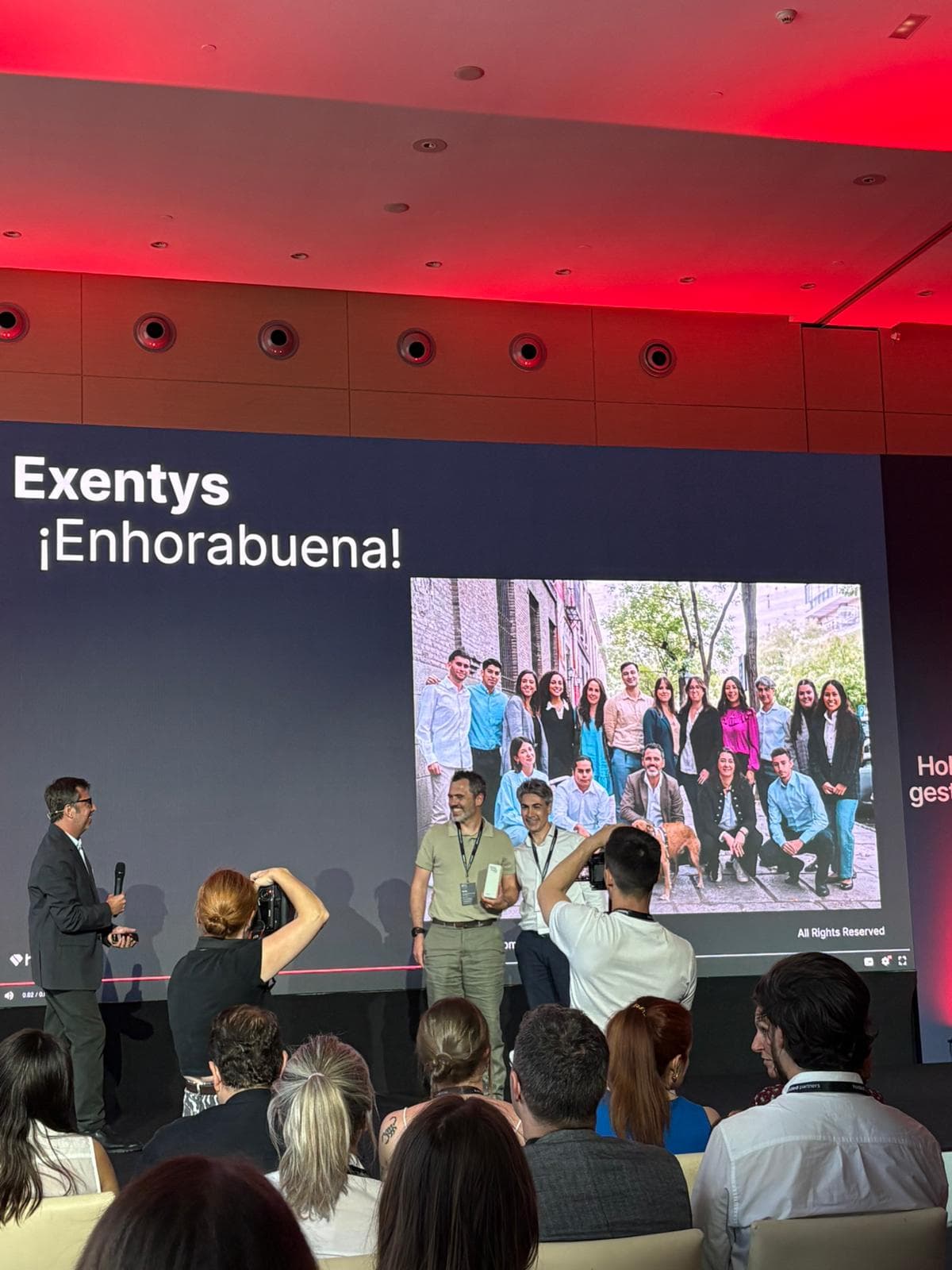
A Holded consultant translates the way you work into ERP configuration: implementation, migration, integrations, training and support. Holded keeps an official directory of Solution Partners, and Vycte is listed as a Gold Solution Partner, a level very few partners hold. We explain it in what being a Holded Gold partner means.
When choosing a Holded partner or an accounting firm that partners with Holded, ask:
- Have they implemented Holded for companies invoicing in several currencies and working with distributors?
- Do they understand export operations (Incoterms, intra-EU VAT, zero-rated exports) or only the software?
- Can they build custom integrations and catalogues, or only configure the standard product?
- Will they train your team and stay through the first month-end close?
Vycte brings both sides together: an export department with more than 300 international trade shows behind it, plus Holded implementation. That is why we design the ERP around how you will sell, not just how you will invoice.
FUNDAE-subsidised training for your team
Holded training for admin, sales and warehouse staff can be organised as company-scheduled training. Spanish companies that pay vocational training contributions have an annual FUNDAE credit applied as a reduction in Social Security contributions, with requirements such as a minimum of two hours per course and informing workers' legal representatives.
We help you fit the training into your available credit. Check your credit and current conditions at fundae.es before planning.
Frequently asked questions
Can I use Holded to invoice foreign customers?
Yes. Holded lets you assign a language and currency to each contact and generates documents in that language, with the exchange rate updated daily against your accounting currency. You can also translate product names and descriptions. During implementation, review the legal exemption wording for intra-EU sales and exports, because it depends on each transaction.
Does Holded support price lists per customer?
Yes, through price lists. You create additional prices for each product, for example one per country or distributor type, and assign a default price list to each contact. Price lists are part of the Inventory module, a paid add-on, so include it in your budget if you export to several markets.
What is the difference between Holded's B2B catalogue and a custom one?
Holded's B2B catalogue lets you choose which items each customer sees, assign price lists per profile and receive online orders. A custom catalogue, like those Vycte builds and connects to Holded via API, adds your branding, market-specific content, prices in the distributor's currency and workflows for sales reps and agents. Test the standard one first.
When does VeriFactu become mandatory?
As of October 2026, current law sets 1 January 2027 for corporate income tax payers and 1 July 2027 for everyone else. On 5 October 2026 the Spanish Ministry of Finance announced its intention to postpone it to October 2028, pending approval. Check the timeline on the Spanish Tax Agency website before deciding.
How long does it take to implement Holded in an exporting company?
As a guide, 6 to 12 weeks for an SME: assessment, setup of languages, currencies, price lists and taxes, data migration, integrations and training. The timeline grows with the number of markets, warehouses and integrations. A custom B2B catalogue or a bespoke integration can add several weeks.
Can Holded training be subsidised through FUNDAE?
It can, if it is organised as company-scheduled training and your company pays vocational training contributions in Spain. The amount depends on your annual credit and there are requirements, such as a minimum of two hours and informing workers' legal representatives. Check your credit at fundae.es before planning.